Hey everybody, this is Dave from a greater town.
Download transcript (.srt)
0:00
0:03
0:06
0:11
0:14
0:15
0:20
0:22
0:25
0:28
0:30
0:35
0:37
0:39
0:41
0:45
0:47
0:49
0:50
0:52
0:55
0:56
1:01
1:04
1:06
1:08
1:11
1:12
1:15
1:18
1:20
1:22
1:24
1:27
1:30
1:32
1:36
1:40
1:43
1:44
1:46
1:48
1:53
1:55
1:58
2:00
2:03
2:07
2:10
2:12
2:13
2:15
2:18
2:21
2:23
2:25
2:27
2:29
2:31
2:33
2:35
2:39
2:41
2:44
2:46
2:48
2:49
2:52
2:56
3:02
3:06
3:10
3:14
3:20
3:26
3:28
3:30
3:33
3:37
3:40
3:44
3:47
3:48
3:50
3:54
3:55
3:59
4:01
4:03
4:06
4:08
4:10
4:12
4:17
4:21
4:22
4:27
4:33
4:36
4:38
4:41
4:45
4:46
4:49
4:53
4:54
4:56
5:00
5:03
5:07
5:08
5:10
5:15
5:16
5:18
5:19
5:21
5:22
5:24
5:25
5:27
5:31
5:34
5:36
5:38
5:40
5:43
5:44
5:46
5:49
5:50
5:52
5:55
5:58
6:00
6:01
6:03
6:06
6:08
6:10
6:12
6:14
6:16
6:17
6:19
6:21
6:24
6:26
6:31
6:38
6:43
6:46
6:48
6:49
6:52
6:54
6:58
7:01
7:03
7:06
7:09
7:11
7:14
7:16
7:17
7:20
7:22
7:26
7:29
7:30
7:32
7:33
7:36
7:38
7:39
7:41
7:43
7:44
7:46
7:48
7:50
7:54
7:55
7:57
7:58
8:01
8:05
8:07
8:09
8:13
8:16
8:18
8:20
8:24
8:25
8:28
8:29
8:32
8:34
8:36
8:39
8:40
8:44
8:46
8:50
8:51
8:53
8:55
8:57
8:59
9:03
9:04
9:08
9:10
9:11
9:15
9:21
9:25
9:27
9:28
9:31
9:32
9:35
9:37
9:39
9:40
9:42
9:44
9:46
9:49
9:51
9:52
9:55
9:56
9:59
10:00
10:03
10:05
10:07
10:09
10:10
10:13
10:17
10:19
10:22
10:25
10:29
10:31
10:32
10:35
10:37
10:38
10:40
10:42
10:44
10:46
10:47
10:49
10:52
10:56
10:58
11:00
11:05
11:06
11:08
11:09
11:10
11:13
11:15
11:19
11:21
11:25
11:29
11:33
11:35
11:37
11:40
11:43
11:45
11:47
11:50
11:55
11:56
11:57
11:59
12:02
12:03
12:05
12:07
12:10
12:13
12:16
12:18
12:21
12:23
12:25
12:27
12:29
12:30
12:31
12:33
12:37
12:40
12:42
12:46
12:49
12:51
12:54
12:56
13:00
13:03
13:04
13:07
13:10
13:12
13:14
13:16
13:19
13:20
13:21
13:24
13:27
13:30
13:33
13:35
13:37
13:40
13:44
13:48
13:51
13:52
13:54
13:58
14:01
14:03
14:09
14:14
14:16
14:18
14:21
14:23
14:27
14:32
14:37
14:39
14:42
14:45
14:49
14:53
14:55
14:58
15:01
15:02
15:05
15:07
15:10
15:12
15:15
15:18
15:19
15:21
15:24
15:26
15:30
15:33
15:36
15:39
15:42
15:45
15:49
15:51
15:52
15:54
15:55
15:56
16:01
16:03
16:04
16:06
16:10
16:11
16:14
16:16
16:18
16:23
16:25
16:26
16:30
16:32
16:34
16:40
16:42
16:44
16:46
16:50
16:53
16:56
16:58
17:00
17:02
17:06
17:09
17:11
17:13
17:16
17:18
17:20
17:20
17:23
17:25
17:27
17:28
17:31
17:32
17:33
17:35
17:38
17:40
17:42
17:43
17:44
17:46
17:50
17:54
17:57
18:01
18:09
18:11
18:13
18:15
18:17
18:18
18:21
18:23
18:23
18:25
18:27
18:30
18:34
18:36
18:39
18:43
18:45
18:50
18:51
18:52
18:56
19:00
19:03
19:06
19:10
19:13
19:15
19:16
19:17
19:19
19:22
19:30
19:32
19:34
19:35
19:40
19:43
19:44
19:45
19:47
19:49
19:52
19:54
19:57
19:59
20:02
20:06
20:09
20:11
20:15
20:18
20:25
20:27
20:32
20:38
20:39
20:43
20:47
20:50
20:52
20:53
20:55
20:59
21:02
21:03
21:05
21:08
21:10
21:12
21:14
21:18
21:20
21:23
21:26
21:29
21:32
21:33
21:36
21:38
21:39
21:43
21:45
21:47
21:51
21:57
22:00
22:02
22:04
22:07
22:10
22:11
22:15
22:17
22:19
22:20
22:22
22:25
22:28
22:31
22:33
22:34
22:36
22:39
22:41
22:43
22:48
22:50
22:53
22:55
22:57
22:59
23:01
23:04
23:07
23:08
23:10
23:12
23:13
23:15
23:17
23:20
23:22
23:26
23:28
23:29
23:31
23:33
23:36
23:38
23:41
23:45
23:48
23:50
23:52
23:55
23:58
24:02
24:06
24:08
24:11
24:15
24:17
24:21
24:23
24:26
24:27
24:29
24:32
24:34
24:36
24:38
24:41
24:43
24:45
24:47
24:49
24:51
24:52
24:56
24:58
24:59
25:01
25:03
25:07
25:10
25:12
25:13
25:15
25:17
25:20
25:22
25:23
25:28
25:30
25:32
25:37
25:40
25:43
25:47
25:49
25:50
25:52
25:55
25:59
26:01
26:03
26:04
26:06
26:09
26:12
26:15
26:18
26:21
26:24
26:26
26:29
26:32
26:37
26:40
26:42
26:44
26:47
26:51
26:52
26:54
26:56
26:59
27:03
27:06
27:09
27:11
27:14
27:17
27:22
27:23
27:24
27:28
27:30
27:32
27:35
27:41
27:43
27:47
27:48
27:51
27:54
27:56
27:59
28:01
28:04
28:06
28:10
28:14
28:16
28:20
28:22
28:24
28:25
28:27
28:30
28:32
28:35
28:36
28:39
28:42
28:46
28:50
28:52
28:55
28:56
28:58
29:00
29:01
29:04
29:05
29:09
29:12
29:14
29:16
29:19
29:22
29:22
29:26
29:29
29:31
29:34
29:35
29:37
29:40
29:42
29:44
29:47
29:50
29:52
29:53
29:56
29:59
30:01
30:05
30:09
30:12
30:13
30:15
30:18
30:21
30:23
30:24
30:27
30:29
30:33
30:35
30:38
30:40
30:43
30:46
30:48
30:50
30:54
30:55
30:58
31:00
31:02
31:05
31:09
31:10
31:13
31:15
31:16
31:19
31:23
31:24
31:25
31:26
31:28
31:31
31:32
31:34
31:36
31:39
31:41
31:45
31:46
31:49
31:57
32:03
32:07
32:10
32:13
32:13
32:14
32:16
32:18
32:19
32:21
32:25
32:26
32:28
32:29
32:30
32:32
32:34
32:37
32:38
32:40
32:42
32:45
32:46
32:47
32:49
32:50
32:53
32:55
32:57
33:01
33:03
33:05
33:07
33:09
33:12
33:15
33:19
33:21
33:23
33:25
33:27
33:30
33:33
33:36
33:40
33:43
33:47
33:49
33:51
33:52
33:54
33:56
33:58
34:01
34:04
34:06
34:06
34:08
34:10
34:14
34:16
34:18
34:20
34:22
34:23
34:24
34:26
34:31
34:33
34:37
34:41
34:43
34:48
34:49
34:50
34:54
34:58
35:02
35:03
35:05
35:06
35:11
And as you all know, what we do here
is meet local business owners and hear their story
about their business, how they got started
and sort of where they're at now.
So today's episode, we've got Craig
and I'm just gonna let Craig start up
and tell us who you are, how'd you get started
and tell us about your business.
Thank you, appreciate you having me on board today.
Craig Herman, I've lived in Las Vegas since 1973.
Started in the janitorial industry back in the 80s
and did commercial janitorial.
And I discovered my clients had commercial carpets
that needed cleaning, so I started a carpet cleaning company.
I soon found out that while I had this equipment
to clean my client's carpets,
there was a natural progression
to step in doing water damage.
So I'm doing water damage and I like it so much better
than the janitorial business.
I sold my janitorial industry and dove into this back in 96,
full time doing water restoration,
got into the mold industry, started doing mold abatement
and then got my contractor's license
because I would do a water loss for a client.
I'd be removing building materials
for whatever water damage happened at the property
and or mold and they'd want to, they'd say,
hey Craig, what about putting my home back together?
In Nevada, you have to have a Nevada contractor's license
to perform those tasks.
So we naturally evolved to become
a full-fledged restoration contractor in Las Vegas.
Okay, all right.
So I'm gonna try to like walk through sequentially, right?
So this is 96 and you had been doing carpet cleaning,
transitions into water damage or restoration
as you're calling it.
And I'll ask some questions about all the terminology
around that in a minute.
But so now, you've done that and now,
how quickly did you get into, actually, you know what?
I'm sorry, should step back a second.
What's the name of the business?
We haven't.
Construction by Mirage and Mold Eliminators.
The reason there's two different names is Mold Eliminators
points straight at what I'm dealing with
as far as people's homes.
They wanna have it eliminated.
So we've called the restoration industry Mold Eliminators
and the construction company, Mold Eliminators
doesn't sound like a name you would use for construction.
So we started construction by Mirage.
Right, right, okay, very good.
They go hand in hand.
Yeah, sure, yeah, it makes total sense.
You're sort of feeding yourself business,
which is brilliant.
Okay, so how long after the mold,
you started working on mold,
did you do the construction part?
It pretty much happened simultaneously.
As I was doing it, it's like immediately,
I'm starting to do work for clients
and I needed a contractor's license
to legally step into that dynamic.
So as progress, I got my license for construction at 04, 2004.
Okay, yeah, so a few years later, yeah, okay.
Yeah, all right, that's incredible.
All right, so that's incredibly impressive.
I mean, we're talking 95 to 2006, it's 30 years.
You should be very proud of that.
I've seen a lot.
We've been to the Gulf Coast of Mississippi
when Hurricane Katrina hit the Gulf Coast.
So we've mitigated, which is another word for remediation
for mold impacted building materials.
We've seen the worst, homes underwater for eight hours.
That's something you really can't describe
unless you're standard looking at it.
And especially the months afterwards
as the building material sat wet all that time,
it just corroded and ate away stuff.
So we've seen the worst you can see of mold
to the simplest scenarios where
from a whole house being underwater
to a simple hot water heater that fails in someone's garage
and floods out their garage or maybe part of their house.
I've done every dynamic between those two.
Yeah, yeah, okay.
All right, so I'm glad you sort of went into that
because I personally have never,
well, actually that's not true.
We had a mold, I don't know what kind by any means
in our crawl space at one point in a prior house.
So I'm curious to start learning a little bit.
I mean, I'm sure there's hundreds of kinds of mold
or maybe not that many, but a lot.
So to a normal consumer that doesn't really understand,
they may just be thinking,
oh, there's black spots on my ceiling, I need help.
What is it that's actually happening?
Well, first off, mold is ubiquitous.
It's in the air continually around us.
We accept normal levels of mold that's outdoors.
We should have a cleaner level of mold inside of our home,
a lower consideration because filtration, air conditioning,
carpet and things like that
kind of captures some of those things.
So when a consumer has visualization
of something that's catching your eye,
if you see the building material
starting to pull away from the wall,
like your baseboards pull away from the wall
or you see discoloration,
that's the time to call a professional.
This first moment you notice it
because our insurance covers,
that's what is for sudden and incidental damages
to where if you see the damage and you think, well,
and you kick the can down three months and then you go,
you know what, I better address this before it gets worse.
And now it's gotten worse.
And it's three months later, you call your insurance company
and the first thing they're gonna ask you is
what's the date you noticed it?
And if you give the true data three months ago,
they may be cordial and polite on the phone,
but they're gonna deny the claim
because we're covered for only sudden and incidental damage.
So it's important that when a homeowner notices something,
they immediately call a professional like Mold Eliminators
to come out and investigate it.
We do free and home consultations.
So there's no cost or obligation to the homeowner.
You're gonna professional to come look,
give you evaluation and give you a proposal
how to correct your scenario.
Yeah, okay, wow.
See, like this is why we love doing these things,
these interviews,
because I really wouldn't have thought
of the insurance angle and the whole, you know,
reported date and all this sort of stuff.
So it's great to have exposed that
or, you know, brought that to the surface.
Okay, and is there like a varying degree of danger,
you know, not just in the amount of damage or mold,
but mold types, like, is that a thing?
That's a great question.
It's a very subjective question
because every one of us have a different immune system.
For example, you could line up 10 people in a room
and introduce a mold spore, let's say, stacky bultris,
and you introduce it at a high level.
Maybe two thirds of the room don't notice anything,
but one third of the room of people will start to have,
you know, lightheadedness, itchy eyes,
their sinuses may start to run.
So it depends upon our individual immune system
and how it's gonna react to the spore.
As you know, and again, there's before,
there's over a hundred thousand different species
and genres of mold that's out there.
So it all depends upon what you have an allergy to.
For example, I have an allergy to wheat and flour.
So if I eat anything with wheat and flour,
it affects my body.
The same thing with mold spores.
People have allergens to airborne particulates
they may not be knowledgeable of.
It could be pollen in the air.
It could be dust in the air.
That kind of the carrying point
for bringing in the mold spores,
but those mold spores are light, they're buoyant,
and they float through the air.
And if you have something decaying inside your home
that has water introduced,
I guess I should say this,
in order to have mold, you need three things.
Water is the first source.
It feeds onto an organic building material,
such as drywall,
kitchen cabinets are made from pressed board with glue.
So anything with glue or paper.
So that includes wallpaper, your kitchen cabinets,
your vanities, subflooring,
a linoleum flooring has glue on it,
wallpaper has glue on it.
And of course, wallpaper and drywall has paper on it.
So those properties can grow mold.
So all you need is the third element is time.
You get that building material wet,
let it set wet for three days to 10 days,
and you have the potential for mold to start growing.
Now, obviously there's different factors.
Is it a fresh water or is it a sewage water?
Is it hot, is it cold?
You introduce a sewage water and you have a warm environment,
it's gonna grow rapidly.
You could have a fresh water loss in a cold climate,
and it may take three months for it to grow
because it doesn't have the chance for it to really go.
So it's all a very subjective question
of the person's immune system
and how the mold was introduced
and how their system's reacting to that airborne particulate.
Okay, all right.
So let's say I notice something suspicious
and I call and you guys come in,
you give the quote,
you know, an inspection,
and let's just scope it to a fairly small thing.
It's not total flood or anything like that.
What does it take to get rid of it?
Is it a one-day process?
Is it 10, like how does it work?
There again, that's subjective.
If it's a small area like behind a commode
and you have a little leak from the toilet overflowing,
simple project.
Unless it goes in behind the vanity
that's to the left or right or behind the shower,
then it becomes a little bit more involved.
But if it's just sheer drywall
and there's no marble or cabinets or granite, easy.
You're in and out in a day and a half, two days
to mitigate it.
That's just the mitigation part, removal of it,
not the rebuild.
If you've got it behind your kitchen cabinets
and you've got a beautiful kitchen cabinet
with cherry wood cabinets and a very nice granite
that your wife chose that she'll never wanna get rid of
and now you're having the contrary,
just saying we're gonna have to take out your kitchen
and pull up your granite,
that doesn't make homeowners very comfortable.
So it's a very subjective and where it's found.
Kitchens, bathrooms, showers,
more tedious and much more expensive.
Simple drywall with no special finishes
like Venetian plaster or any faux finishes.
Very simple to do.
So it's a very subjective question
of what was introduced to the mold
and how much it's grown.
Sure, sure.
The key thing is drying it down.
The second you as a homeowner notice water impacting
your building materials,
you wanna call us out immediately
because we could dry it down
and even a big kitchen like I first just described,
I can dry that down without removing any of the cabinets,
any of the kitchen granite tops or anything.
I can make it dry and prove it's dry
and have air samples to validate that after the fact.
So time is of the essence for the homeowner to be wise
and to call out the professionals
of mold eliminators right away.
Yeah, yeah, okay.
All right.
My goodness, this is true for every industry
but there's so much that professionals know
that the average consumer has just thrown no idea.
There's no reason for them to know, right?
So again, this is one of the reasons why we do these talks.
Okay, so in addition to mold,
I know you're also doing fire and what else?
Yes.
Fire, water, mold, we do hoarders.
Sometimes folks just collect things
and can't seem to quite release their hands from it.
I have a woman on my team that is great
at speaking with people who have a hoarder issue
and help them hold their hands and make them feel comfortable
because it's typically a hard separation from your product
or your things you have in your home.
It's hard for someone to separate.
It is very emotional.
So I have a lady on my team who's very empathetic
and warm towards that person.
So that helps.
Another thing that we do is crime scene.
People pass away in their homes, things happen
and we go in there, we can correctly remove
any building material that's compromised
because of bodily fluids
and restore the home back to pre-loss.
Wow, okay.
Yeah, that's another one
that I just wouldn't have ever thought of.
It's the sort of thing you don't think about
until you need it, I guess.
Right.
Another piece of it too is asbestos.
So some homes, if they're built prior in our nation,
prior to 78, have the potential to have asbestos in them.
If that's asbestos, then that's a whole different animal.
To remove that, there's permits from the city or state,
there's proper removal, the guys have to be uniformed,
they gotta be testing the air all the time
to make sure we're not bringing those spores outside
of the contained environments.
And mold is similarly handled as you would with asbestos,
just not to the severity of the legality of asbestos,
but it's very, very similar.
Our guys do the suits, they set up for containment,
they remove it, they bag it, they dispose of it safely.
Mm-hmm, mm-hmm.
Okay.
Asbestos, and then what's the other one?
Is lead paint still a thing?
Yes.
Removal, yeah.
And we're certified for lead-based paint removal also.
That's not a common thing, but it's used,
like for example, we do work for the city of Las Vegas,
where they have water systems.
And then the pipes are coated with lead-based paint
because it deters into your corrosion.
So there's one of my clients, the city of Las Vegas,
that hires us to remove lead from building materials
they use for their plumbing.
Big, we're talking about big plumbing valves and pipes.
So there is that scenario.
It's not oftenly used, and mostly in homes
that are past 1960 and beyond,
would have lead in the paint and or some of the finishes.
Right, yeah, my dad was a painter.
So, you know, in the 70s up until he retired more recently.
So yeah, I mean, I know he used to use lead paint.
So, you know.
Okay.
So what else is he gonna ask?
So we did mold, we did, oh, I know.
I was on your website and I noticed something,
and I'm sorry, I'm gonna incorrectly describe the document,
but just like every industry, there is rules, right?
Especially in something like this,
where there's regulations about how this gets handled.
And I noticed the document,
which apparently you've been a co-author of.
Yes, there's an internet, it's called the IICRC.
It's a sanctioning body.
They write standards for water damage, for mold,
for odors, for crime scene cleanup,
for carpet and textiles.
They write standards that are across the board
for restoration contractor like myself.
There is one document called the mold standard,
which is a S520.
It's a living document that's been around for 18 years,
and it's required to be evaluated by professionals
in industry every eight years
and brought up some new current standards,
whether it's science that we use
or systems or chemicals that we use
for doing abatement projects for the removal of mold.
I was invited by my peers, gosh, seven years ago,
and we spent six years every week on a Zoom call
with professionals around the world
reviewing this living document and retooling it,
which was reissued out on 2024 as our print date.
So I have the privilege of being a co-author
of the International Mold Standard.
Oh, that is huge.
Huge.
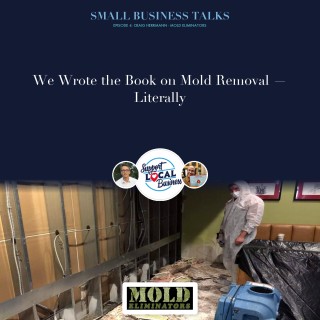
You wrote the book.
I enjoyed it.
It was enjoyable to be consulting with other people
who are much smarter than me.
I'm pretty smart,
but these cats are much more scientifically involved.
So it was really rich for me to get investing six years
of my time into that,
because I walked away with a tremendous amount of knowledge
that I've shared with my staff,
which ends up to the consumer.
So you're getting the A-team, I guess, for a mold abatement
when you call mold eliminators.
Right, okay.
So we haven't exactly covered this.
I mean, we sort of touched on it,
but in order to be a mold eliminator
or any of these abatement or removal projects
that we've described, you need to be certified,
I'm assuming.
There is very few regulations.
There's New York, Florida, and Texas are three of the states
that demand contractors be specifically licensed.
I would wish that they would put that requirement
across all the 52 states of America,
because it would create a common platform
for us all to work on.
But in most municipalities, aside from those states,
you don't have to be licensed to do mold abatement,
which is to me a tragedy, I think,
because then you get guys that,
and I get called to come in behind them all the time.
They put lipstick on the pig.
They don't pull the proper building materials.
The house is flooded.
They just don't remove anything,
baseboards or drywall, put a fan against it
and charge for their equipment and walk out the door.
And they're saying thank you.
And you're thinking, okay, great, my house is back.
And then you decide to change out your flooring.
You pull off your baseboard
and it's black behind your baseboard.
And you're going, oh my gosh, that was two years ago.
You go and call your insurance company and they go,
well, sorry, that was two years ago.
That's not covered.
It was neglect.
You didn't do it right.
So it's important not to get an uncertified firm.
Again, if they can say they know the standard, the S520,
and they abide by the IICRC S520,
they should be a reputable company in your city.
I'm actually shocked that there's not state or nationwide,
I mean, I guess it wouldn't be done on the federal level,
but even that more states don't require
some sort of certification.
I'm actually really shocked.
It takes lawsuits.
There just has to be enough people being legally chased
after they finally make it legislature.
That's what it takes.
You really have to fight like it.
And that's how asbestos got to be the problem.
It took from the thirties when my dad worked
in asbestos plants back in Buffalo, New York,
he got mesothelioma and you don't know,
cause it took 30 years for the signs of asbestos
to affect that person's respiratory system.
It's gonna take time before mold really affects people.
It's not as bad as asbestos, but it's not healthy either.
Yeah, right, right.
Okay.
Okay, so then from a consumer's point of view,
again, it's like, there's a lot of learning to do, right?
And so what I'm hearing now from a consumer's point of view,
what they should ask when they call someone in
to look at the mold or whatever,
are you following the standard?
I'm sorry, I forgot the terminology.
The name of it.
IICRC.
Yeah, okay.
So at the very least ask that question.
And not that everybody or some contractors are gonna lie,
but how would a consumer know
that they actually do follow it?
What would they look out for?
Well, you can go to the IICRC.org website
and type in, find a professional near me.
Oh, okay.
So you can go to their website.
There'd be a great place to start.
Cause if you want somebody for doing a fire job
or you have a unique odor you wanna get rid of
or mold or water or clean your,
you've got some really fine silks or a pulcher in your home
and you wanna find somebody who could properly care for those,
the standards written by this organization
cover anything that pretty much is immaterial in your home.
Okay, so I go and I do a Google search
for mold removal or whatever.
And I find John's mold removal, just some company
and I call them in and they give me a quote.
What is, and I ask, are you following the IIRR standard?
They start to do the job.
And me as a consumer, I really don't know what to look for.
So how do I quality check the work?
I have the answer for that.
You go to lasvegasmold.com and look at procedures
and on my website and I spell out step one through 15
of what should happen, set controls,
establish negative air.
The guys should be wearing,
and the negative air means that the plastic they put up
on the room should be pulling in and not blowing out.
If it's positive pressure inside that space,
and let's say they put a fan in there
and they're blowing a fan right on the mold
and so much air pressure is being drawn from outside.
They're blowing those mold spores outside
of the contained space.
And that's called cross contamination.
That tells you you hired a fool to do the work for you.
Someone doesn't know what they're doing.
So you have to have controls and negative pressure,
meaning we're drawing more air from inside our space.
That way it can't slip out of our controls.
So on my website, I spell out all the steps
that are properly to be done
for a job to be mitigated correctly.
Yeah, okay.
That's incredible.
I'm thrilled that we got on this call and did this today.
For anybody that will find the video,
they're gonna learn an awful lot.
I know I have, so it's fantastic.
All right, so that, I think that's everything I have.
Is there anything else that you want to cover,
let people know that when they're looking
for this sort of service, what to do
and what to watch out for or anything else?
Just the one thing, I just had a phone call conversation
with an old friend of mine today.
He went in as a cabinet maker.
He's not a mold expert.
And he was replacing cabinets in someone's house
and pulled back the cabinets.
And all of a sudden he saw black all over the back wall.
He took it upon himself and his homeowner didn't,
just to cut it out.
That's the worst thing you can do
because we don't have controls.
I guess I should say,
it depends upon the person's immune systems inside the home.
If the person in the home has a healthy immune system
and they're not gonna be affected by the plumes
of mold spores that are gonna be created
by this hack job handyman carpenter,
if your immune system is healthy, great, no problem.
But if you're a mother who just gave birth
to a one month old baby who was an incubator
for six months or six weeks,
and that baby just came home
and that carpenter removed all this stuff
and plume your air with all that mold spores,
get you and your baby out of the house.
Because that plume of mold spores,
because we're born with no immune system.
That child is born with no immune system.
It's developing his immune system
as it's going through his life.
The worst thing you wanna do is like,
boom, hit it with a bunch of mold spores.
So I would caution people to be
what I call a cowboy approach, hire a professional,
vet them to make sure they're certified,
check their insurances.
You could verify if their insurance broker,
they have a lot of claims against them
because of doing shoddy workmanship.
There's several ways you can check out who this person is
and see if they're worth their salt in the industry.
Yeah, that's another great one is the insurance check.
Yeah, yeah, again.
And go to the website for the IICRC
and they're gonna vet the individuals
to make sure they're following the standards.
I have 11 certifications with the IICRC.
I have two masters, one is fire and one is water damage.
So I hold masters with the IICRC in the industry
that I love and enjoy.
Yeah, okay.
I just thought of something else.
In several houses that I've lived in,
I've seen the air conditioner exhausts
where the air comes out.
There's sometimes, I don't wanna say,
I'm not gonna say mold,
because I don't know that it is,
but there's black stuff.
Is that clean mold?
Are you living in a humid environment?
Florida.
So what happens in a humid environment such as Florida
is there's dust and pollen
or whatever's going on in the house all the times.
And it's gathering on the walls,
it's getting on the metal or the plastic of the grill
that you're describing to me.
The home is humid, the environment is humid,
so moisture is pretty much passing by that,
pollen or dust or dirt that's sitting on there.
Potentially it could be mold,
it could be simple as just a wet rag
with some Dawn dish soap and wipe it off.
And that scenario, because it's on a metal or a plastic.
Metal and plastic and non-poor services
can't sustain mold growth.
They may have it grow on the surface,
but it can be wiped off.
The surfaces you have to be concerned about
are those that are compromised with the organic,
that are paper, drywall.
Yeah, cabinets.
But as far as marble, tile, solid wood surfaces,
metal or plastic, just wipe it off.
Yeah, yeah, okay, all right.
All right, thank you so much for coming on.
I learned a lot and I know anybody that watches
is gonna too, so I truly appreciate it.
Is there anything else you wanna leave everyone with?
Free and home consultations, give us a call.
We'll be happy to come out and look at it.
No cost or obligation, no pressure.
You're getting someone with the standards knowledge,
evaluating your property and giving you a proper estimate
and supporting you with your insurance company.
Home owners don't deal with insurance companies
every day of the week.
We employ a person eight hours a day that does nothing,
but talk to insurance brokers all day long,
helping to bridge that gap between the consumer
and their carrier so we can help get the coverage.
And a lot of times insurance companies will deny,
even when it's in the parameters of their policy,
they'll deny it just because it's easier to say no
and it's up to the consumer to fight and to come in
and try to change the results of that carrier.
So we fight for the homeowner as well.
Oh, wow, is that typical that there's someone on the team
working the insurance angle?
I can't speak for all the companies in this nation,
but I can speak for mine, it's essential.
If you don't have an advocate fighting for you,
you're gonna be walked on and denied.
And even when you're denied,
sometimes I have to steer them towards a public adjuster
because we can't get through to them.
And I've got cases right now where I probably refer over
to a local public adjuster who is not an attorney,
but a public adjuster is someone who has legal knowledge
and they stand the gap between you and the carrier
and they'll fight and they take a percentage
of what's awarded, but at least it's you
not using all your money to cover the damages.
If it's a kitchen mitigating, you're $30,000.
It all depends on how you view your money.
Do you wanna just throw it away
or you wanna pay a small fee to a consultant
who can fight for you and get that money back?
Right, right, right, right, right.
Okay, you know, you just,
we keep uncovering more things to talk about.
I'm thinking about insurance policies
and whether they do or don't cover mold.
Good question.
Two major carriers in the United States,
state farming and farmers don't cover mold.
They back, took a hit on the chin
about 25, 30 years ago in Texas.
And so the state farm and farmers pretty much
took a black sharpie and just erased all their mold coverages,
charged you the same premium,
but they now removed that from your coverages.
So I'd encourage homeowners to check with their broker,
do I have a mold inclusion?
Usually they set the thresholds at 2,500 or 5,000.
2,500 is really low.
It's hard for me to do any kind of job
for that little bit of money.
5,000 is better.
And if you have a home over a million dollars in asset,
go with Chubb, is my recommendation.
If you have a home over a million.
If you've served in the military
and or your mother or father served the military,
I would recommend USAA.
Those two brokerage insurance industry companies,
they seem to be the best ones that handle homeowners.
I see lots of claims.
So when I hear state farm, I feel bad for the person,
especially they're calling me and say,
I've got mold in my house.
State farm just sent their own adjuster out there.
They deny me coverage.
Oh my gosh, my kitchen has to be tore apart, help me.
Right.
Sometimes I can reverse the decision
through logical conversation with that adjuster
and get them to cover it.
Where instead of them coming out of pocket,
we can turn the decision that the adjuster said denied
into acceptance and they're writing checks.
Wow.
Well, I'm gonna go check my policy.
Yeah, I honestly didn't think about it,
especially here in Florida, right?
Oh yeah.
Yeah.
And if you, I always tell customers,
if you have a membership at Costco or Sam's Club,
go through them and get your insurance on your home
because they write it through such a big book of business
to American family or wherever they broker with
that they'll get a lower rack rate for that insurance
that if you went directly to them yourselves.
Right.
So Costco has a better, I don't make any money on this,
I'm not benefiting, but I just noticed in the industry,
that's a smart way to get your insurance.
If you don't have Chubb or USAA availability to you,
then call your local Costco or Sam's Club
and ask them write it through their companies.
Yeah, that's great advice.
And one sad thing about this,
I've been doing this since, well, the 90s.
I remember meeting State Farm, for example,
on a job site back in the 90s
and they would pull up in their van,
look at the job with us, go back in their vehicle,
type up on a computer with their air conditioner,
with a printer, print out a check and the scope of estimate
and walk in the house and hand that homeowner a draft,
a check, and as well as the estimate,
that gets us to start right away.
Those days are gone, that ship has sailed.
Now they're took the exact opposite approach
instead of being proactive and taking care of the homeowner
like a good neighbor,
is they simply deny and refuse coverages
and make you have to fight
because there's no way in this earth
that you can go take a class action lawsuit
and really come against them with any kind of strength
unless of course you know 60 other people
who've been insured by State Farm and been denied,
you're kind of the lone ranger.
As a lone ranger, you're gonna get stepped on.
Yeah, yeah, right.
Those are the things we see.
The insurance industry has gone more towards
the level of denial than I've ever noticed in my life
and they'll cancel you right away.
They'll cancel you.
Yes.
They'll raise your premiums or they'll cancel you.
They are no longer a good neighbor or a friend.
Yeah.
That or they are not.
You'll notice it if you have a claim.
Probably 10% of the people go through smooth,
90% of the people go through with a headache.
Yeah, well, you know, since we're talking about this,
this is a sort of unrelated,
related to insurance, unrelated to mold.
We got kicked out of State Farm for auto
to no fault accidents and usage of towing.
So we used the towing service three times in three years,
I think, and basically they said,
sorry, we don't want you anymore.
Wow.
Yeah, surprising.
So I was, yeah.
The insurance industry,
and here's my personal take on this.
I've been doing this since the nineties.
And I've had, I had almost a million dollar fire loss
in an apartment complex I was doing
for a property management firm.
Yeah.
I fought with the insurance company
and finally got them to agree
and then they didn't release a check.
It sat on the desks of the claims office
for like a month and a half.
And I finally said to the homeowner, the property owner,
I said, do you mind if I take my gloves off
and I go into the ring and start fighting for you?
And they said, would you please?
Cause here's the apartment complex.
They can't have any income.
Right.
It was like a 10 unit complex.
Part of it, probably a third of it was burnt.
So it was unoccupiable.
So I took the string of emails that I had to the adjuster.
I went online and found the board directors
for that insurance company.
And I sent a letter to all the board members.
I said, is this really the way you really want to be known
in this industry of how you take care of your insureds?
Within 24 hours, I had a phone call.
Within 48 hours, they had a certified check sent to them.
So my personal take is these cats in the board room
are saying, hey, if we're gonna,
let's say state farmer farmers or AAA or any of the,
pick a company, it doesn't matter.
They figure in the month of February,
they're gonna pay out a hundred million dollars in claims.
If they set aside a hundred million dollars for claims
they don't pay them out till March, April, May or June.
They're taking that money and they're playing it
in the commodities and whatever investment portfolio
they have, they're gonna double, triple
and quadruple their money.
Meanwhile, you're gonna be sitting there going,
oh my gosh, I can't live in my house.
I don't have my kitchen, my children.
And I can't do our laundry like we normally do.
So when it comes time to take my son or daughter to school,
I'm having to go to the laundromat and do laundry
because I can't do it in my house
because my insurance carers denied me
or I can't cook in my kitchen.
That's the tragedy we're facing
is these companies don't care at all.
All about the homeowners and where they're all about
the bottom line, the profitability
and they'll kick it down the curb for a season
just because they want to better themselves
and keep their islands and their jets.
That's the real world.
That's the real world.
Yeah, well, we could go on forever about that part.
So maybe we will one other day.
It's a conversation that should be had.
Yeah, okay, well, so for the purposes of today,
again, I'm gonna say thanks
and I'll stop asking questions or else we'll keep going.
Craig, thank you very much.
It's been great.
I learned a lot and we're gonna post this everywhere
on a greater town and the social media that we've got.
And I hope it helps you with your business.
Well, thank you, appreciate your time.
All right, have a great day.
You as well.
All right, take care, bye.
All right, that's it.